
In the candlelit library of his Mortlake home in 1582, John Dee and Edward Kelley sat before an obsidian scrying mirror — an Aztec artifact polished to a dark, reflective surface that Dee believed could pierce the veil between worlds. Through Kelley's visions, angels delivered a complete system: Enochian, a new language with its own twenty-one-letter alphabet, grammar, and vast tables of power. Dee transcribed every syllable.
In the same household, he conducted the more earthly work of Elizabethan intelligence. He reportedly signed his most sensitive dispatches to the Queen with the symbol 007 — the two circles for her eyes alone, the seven the planetary number of the alchemists.
This was no coincidence. It was protocol.
The Ritual of Interception
All intelligence work is ceremonial magic enacted in the material realm. The analyst is the summoner. The target is the spirit. The intercepted signal is the evocation. The decrypted plaintext is the spirit's unwilling confession.
Dee's Enochian system was never merely mystical. The seventeenth-century natural philosopher Robert Hooke, examining the angelic journals after their posthumous publication, concluded they functioned as cryptography — disguised accounts of political and military intelligence gathered during Dee's European travels, hidden behind the language of spirits to evade the Inquisition and rival courts. The book of spirits, Hooke wrote, concealed relations of quite another thing under feigned stories of apparitions, so that any discovery would be treated as religious enthusiasm rather than espionage.

The scrying sessions doubled as secure SIGINT channels — the only truly private medium available to the Elizabethan mind.
Sir Francis Walsingham, Elizabeth's spymaster, ran what amounted to England's first Black Chamber: a postal interception bureau staffed with cryptographers such as Thomas Phelippes, who steamed open foreign correspondence, broke ciphers, and resealed them with forged seals. Cryptanalysis and conjuration sat side by side in the same kingdom, sometimes in the same household. The line between them was thinner than the wax on a royal seal.
The Long Arc
The thread runs unbroken. Black chambers evolved into systematic frequency analysis. Room 40 read German naval traffic with near-oracular fluency in the First World War. Enigma fell at Bletchley not through brute force alone but through ritualistic precision: Turing's bombes as mechanical golems, probabilistic demons summoned by mathematical incantation. By the late twentieth century the temple had gone fully electronic — ECHELON, PRISM, Tempora, every packet and metadata heartbeat offered on the altar of collection.
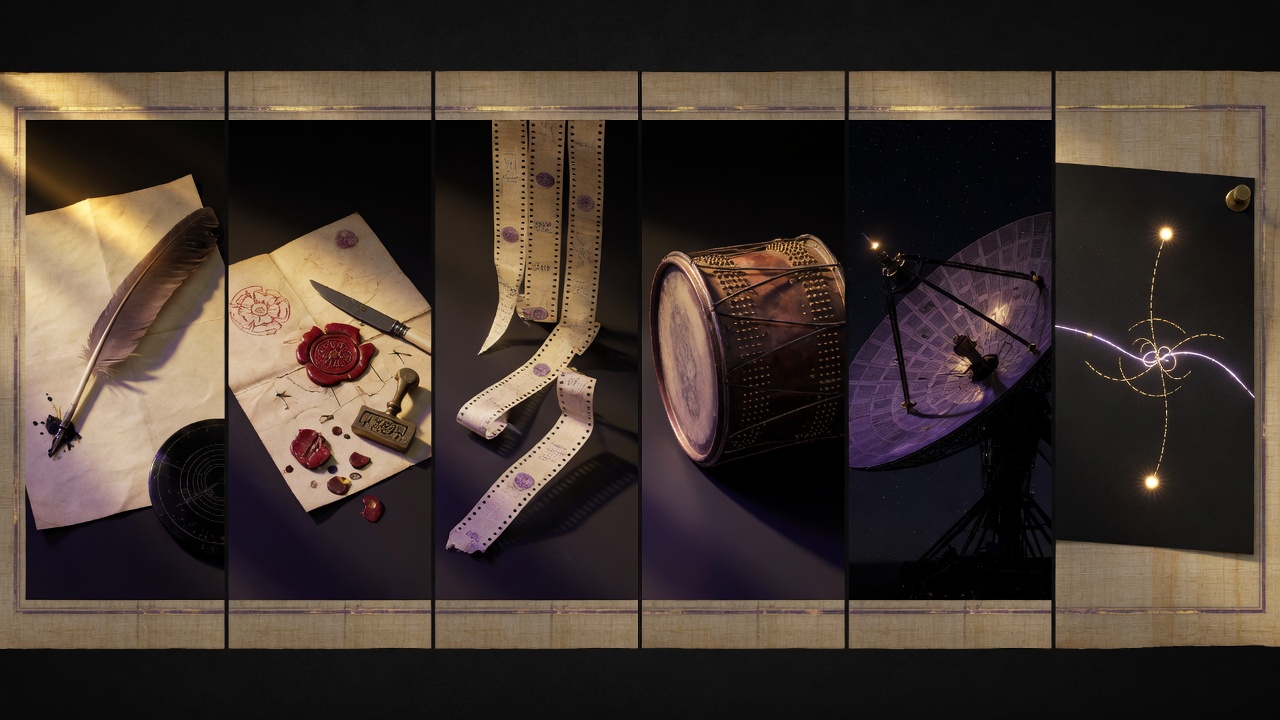
Each generation gave the analyst a longer reach. The target grew quieter; the listener grew louder. Dee's mirror was the prototype, and the four centuries that followed were variations on the same operation, performed at industrial scale.
Then, in our moment, the line breaks.
The Mirror That Looks Back
Quantum-key distribution exploits two laws the universe will not bend. The no-cloning theorem forbids any perfect copy of an unknown quantum state. The measurement-disturbance principle guarantees that observation alters the observed. Entangled photon pairs are prepared and sent; any eavesdropper who attempts to listen collapses the state and leaves their fingerprints in the channel itself. The key is not derived from mathematics that a sufficiently powerful machine might one day unwind. It is summoned from the physical substrate of reality, and the act of interception becomes the act of confession.

This is the inversion the long arc has been building toward.
For the first time in the lineage, the channel itself refuses the summoner. The sealed letter, opened, screams. The spirit, summoned without consent, leaves the circle empty. Whatever the analyst learns by intrusion is poisoned at the root, because the intrusion is the message that arrives before any content does. This is not Enochian perfected. It is the counter-grimoire — the first protocol in four hundred years of intelligence history that hands a fragment of sovereignty back to the one being read.
The victory is partial. QKD secures the channel, not the endpoint. The analyst's older arts — coercion, malware, the human asset, the metadata that surrounds even perfect cryptography like a halo — all still work. The mirror that looks back protects only the glass between two points.
But the principle is the thing. For the first time, physics itself has been conscripted on the side of the watched.
Dee would have grasped the meaning, even if the mechanism would have been alien. He spent his life at the threshold between what could be known and what knowledge cost. He understood that every act of sight is also an act of submission to the seen — that the magus who summons is also summoned, that the analyst who reads is also read. QKD is the first technology to encode that ancient reciprocity into hardware. The angels, at last, have a way of refusing the call.
Whose Angels Control the Distribution Layer
The question for 2026 is not whether unbreakable keys exist. They do. The question is whose infrastructure carries them and whose endpoints terminate them.
China's Micius satellite reentered Earth's atmosphere in late January 2026 after nearly a decade of service; its successors and the national fiber backbone now form an operational quantum-secured network spanning thousands of kilometers. The EU's EuroQCI program is moving from pilots to operational capability, with the prototype Eagle-1 satellite scheduled for launch in late 2026 or early 2027.
The technology is real. The political question is older than the technology.
A perfect cryptographic channel running on rented hardware, leased operating systems, and cloud platforms owned by the same actors operating the listening posts is not actually private. It is theatrically private. The endpoint is the seam, and whoever owns the seam owns the secret.
This is what the Cold War magi understood and the consumers of the surveillance economy have been trained to forget: sovereignty is a stack, not a feature. You do not have privacy because an app icon shows a padlock. You have privacy when, at every layer between your thought and its intended recipient, the people who could betray you have either been excluded or have given you reason to trust them.
The grimoire works only if the circle is whole.
Field Protocol α-001
The Banishing of the Watched
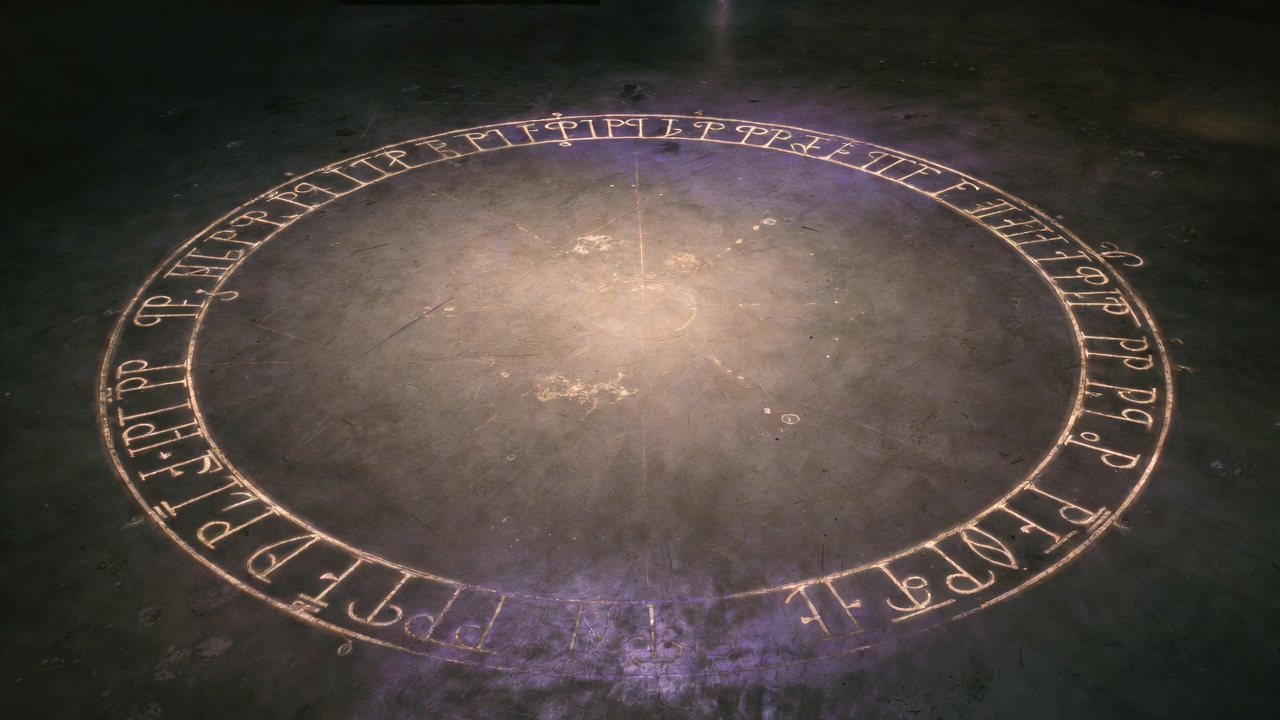
For contemporary practitioners — those who suspect, correctly, that they are read.
The classical literature placed the practitioner in the summoner's chair. This protocol places them where most of us actually sit: inside a circle someone else has drawn.
The summoner across the room is real. The mirror that looks back is real. So is the older truth Dee never quite said out loud: the only signal that cannot be intercepted is the one that was never sent.
Coda
John Dee never chose between science and sorcery. He understood they were the same current viewed through different lenses. In 2026, as quantum networks mature and end-to-end encryption collides with nation-state quantum cryptanalysis, we are not completing the ritual begun in Mortlake four and a half centuries ago. We are deciding, finally, whether the ritual ever served us.
The angels are still speaking. We have built better mirrors. The question is whether we have built any of them for ourselves — or whether we are still, after all this time, transcribing for someone else's court.
The channel is live.
Speak your true name carefully.