 She has been waiting, patient and undeceived, for two thousand years
Begin not with a woman — but with a recognition.
Cleopatra VII Philopator steps into history not merely as a sovereign but as a force that understood, perhaps more precisely than any ruler before or since, that the deepest power is never the power to destroy. It is the power to compel. To hold Rome spellbound not through armies but through presence. To walk into a room and rearrange every hierarchy within it before uttering a single word.

She inherited a kingdom in decline — Egypt, the ancient metaphysical center of the world, now a client state in Rome's long shadow. Her dynasty was Macedonian by blood, Greek by culture, hemorrhaging relevance with every passing decade. Her siblings were rivals and assassins. The empire she was born to rule had been structurally humiliated for a century. A lesser mind might have managed decline with dignity. Cleopatra reversed it.
She did something none of her predecessors had bothered to do: she learned Egyptian. Not because protocol demanded it, but because she understood that sovereignty flows through language, through the intimate recognition of people who had been governed by strangers for three hundred years. She mastered nine languages in total. She studied medicine, mathematics, astronomy, rhetoric, and philosophy — not as ornaments, but as instruments. She was, by all extant accounts, ferociously intelligent and deliberately sensuous in a way that blurred the line between these qualities so completely that it became impossible to know where the intellect ended and the eros began.
This blurring was the science.

She did not seduce Caesar because she wanted him. She seduced Caesar because seduction was the most efficient political technology available to a sovereign who had been deposed and needed to return to her throne before nightfall.
— from the Cosmogram Codex Archives


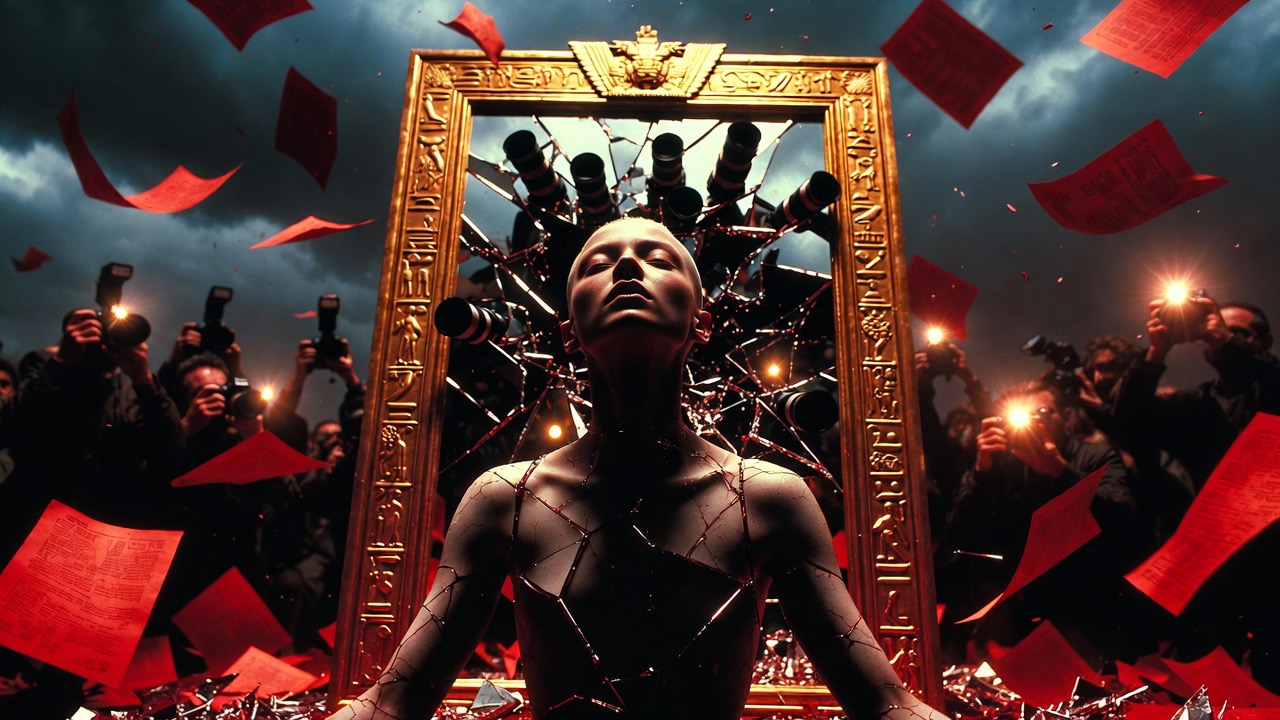 She did not simply enter rooms — she orchestrated them
When Julius Caesar arrived in Alexandria, she staged not a supplication but a theatrical arrival — smuggled through enemy lines rolled in a carpet, emerging before him as simultaneously solution, provocation, and sovereign. Their union restored her to the throne. Their son, Caesarion, was a living challenge to Rome's foundational myths of masculine succession. When Caesar was murdered and Rome needed a new strong man, she didn't grieve long. She evaluated the field.
Mark Antony was not simply the next lover. He was the next alliance. Together they built a counter-empire that fused Hellenistic luxury with Roman ambition, Eastern mysticism with Western pragmatism, Dionysian ritual with cold political calculation. They refused Rome's rigid separation of pleasure from governance — the ancient insistence that a serious man keeps desire in its proper box, locked away from the serious business of power.
Cleopatra understood this separation as the lie it was. Desire is not the opposite of power. It is power's most potent form — portable, ungovernable, impossible to conquer by force.
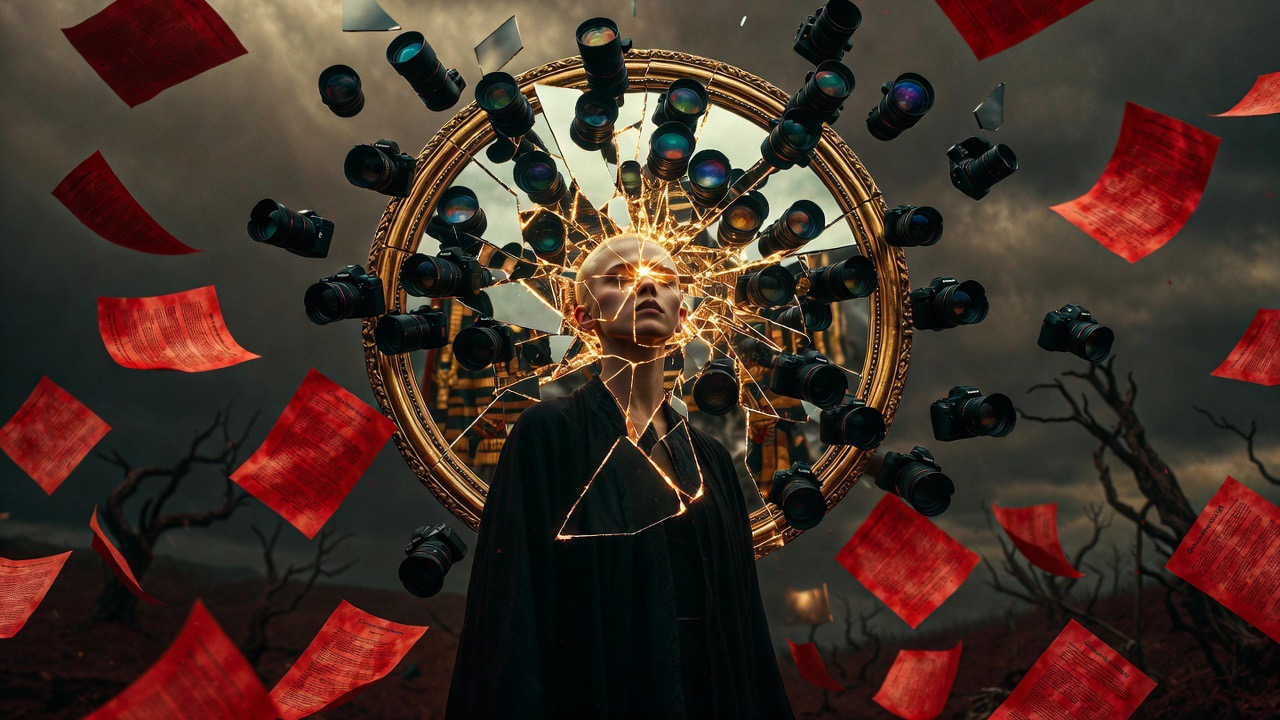
Rome responded with the violence reserved for things it cannot classify. Octavian waged war not just on battlefields but in the architecture of narrative. He gave Rome a story about an Eastern seductress, a foreign enchantress, a witch-queen who drugged great men into treason with her body and her strange gods. He made Cleopatra's sexuality into a civilizational threat, a national emergency, a reason for war. He transformed her desire into pedagogy — a lesson in why power and pleasure must remain forever separate, why the body must not be allowed to enter the throne room.
She chose death before becoming Octavian's trophy. The manner and means remain disputed — but the meaning is not. She denied him the spectacle. She refused to be the lesson.
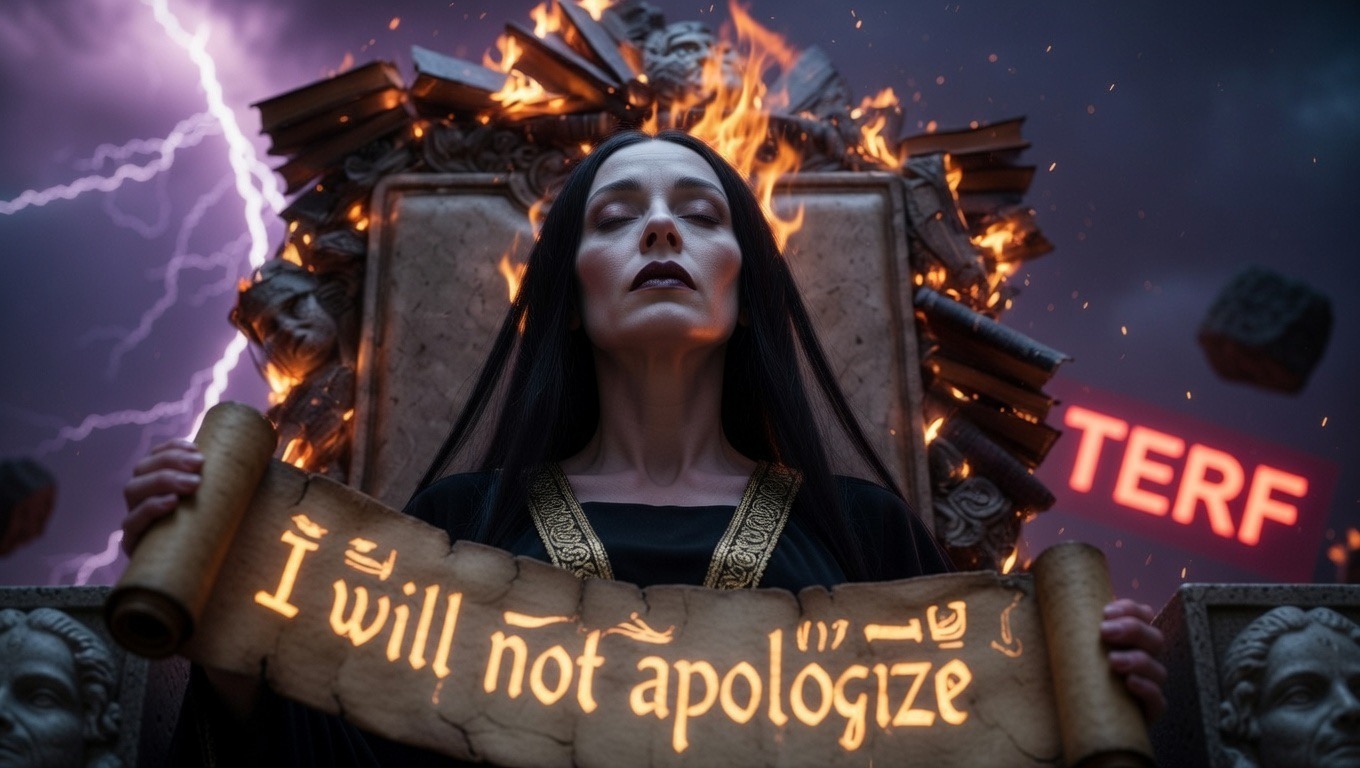 She refused to be the lesson
Two thousand years later, the lesson he intended has dissolved. The story that survived is hers.
 The story that survived is hers
The question worth asking is not why Cleopatra has endured — but how the endurance has changed.
For centuries she was the cautionary tale. The dangerous woman. The proof that beauty is a weapon, and that weapons should be controlled. Painters gave her a dying asp and a pose arranged for maximum male grief. Playwrights gave her speeches about love that conveniently excluded her vast knowledge of military logistics and grain trade economics. Hollywood gave her violet eyes and an American accent and had her wait, always, for a man to arrive and give her purpose.
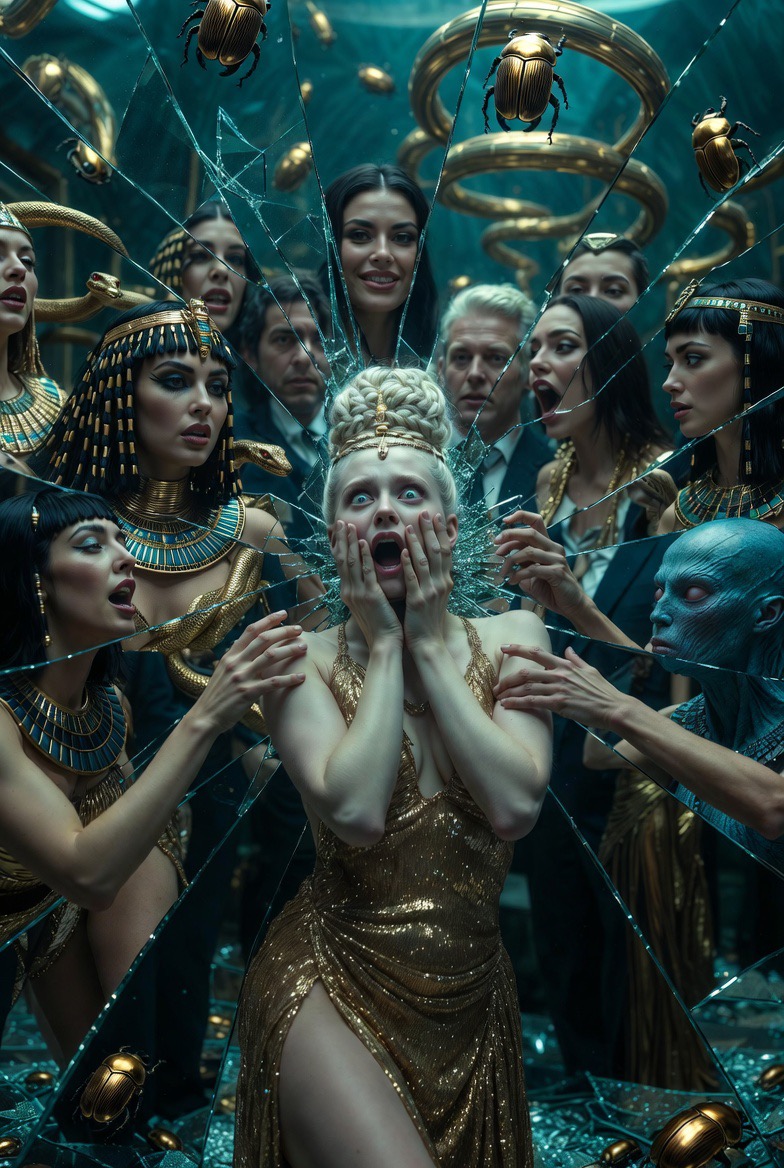

Something shifted in the last decades of the twentieth century. Scholars began digging beneath the Roman propaganda and found an entirely different figure: a working queen who administered one of the ancient world's most complex economies, who communicated directly with her subjects in their own languages, who understood celestial navigation, who co-wrote medical texts, who funded the construction of temples and personally oversaw the rituals within them. The seductress, it turned out, was also the most competent administrator Egypt had seen in generations. The femme fatale was running a country.
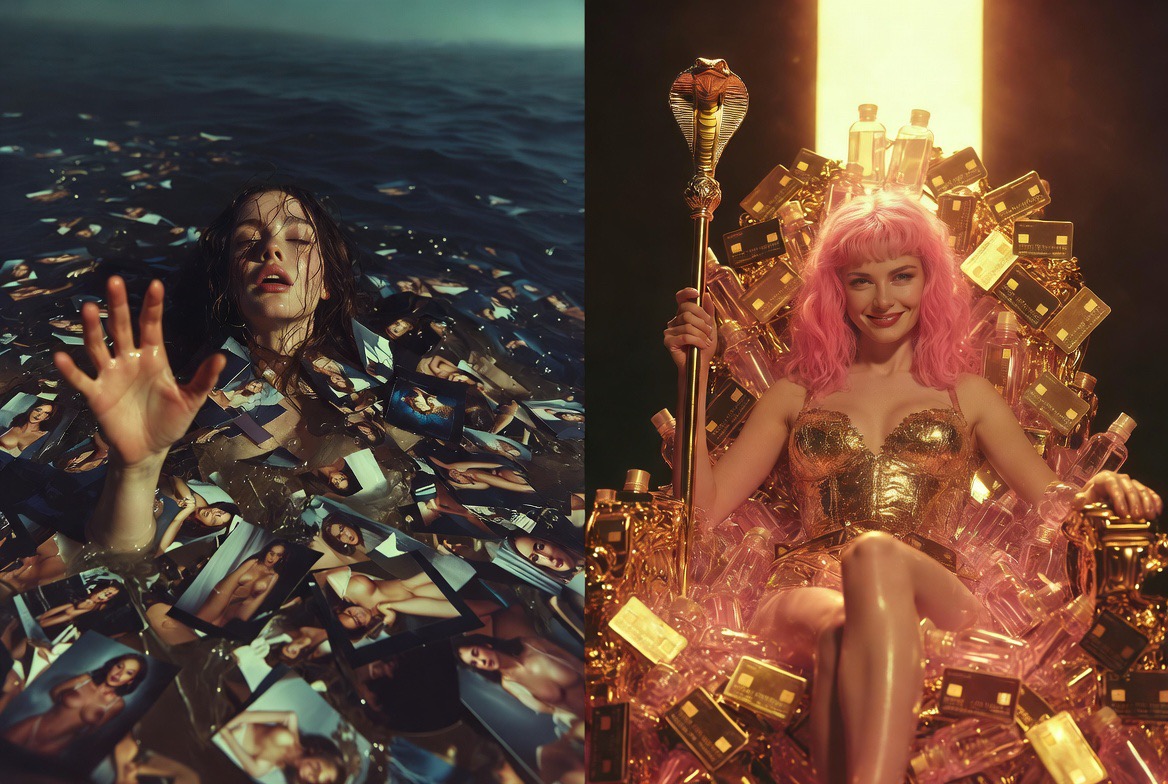 Drowned in images — or sovereign over them
This is the version that now circulates — the Cleopatra who was brilliant first, sensuous as a natural extension of that brilliance, sovereign in every room she entered. And this is the version that keeps replicating across culture, showing up in unexpected forms, in unexpected bodies, in unexpected rooms.
Among the many things Cleopatra understood was the semiotics of arrival. She did not simply enter rooms — she orchestrated them. Every documented meeting with a foreign power involved a carefully staged environment: a specific arrangement of light, fragrance, music, clothing, and silence. She knew that power announces itself before words are spoken, that the first ten seconds of any encounter establish a hierarchy that is almost impossible to reverse later. She arrived to her first meeting with Antony on a gilded barge, sails of imperial purple, the smell of incense preceding her across the water. He came to meet her. He never fully stopped.
This is not seduction as we have been taught to understand it — as feminine manipulation, as the soft undermining of masculine reason. This is strategic theater. And theater, in the ancient world, was sacred technology.
 Theater, in the ancient world, was sacred technology
 You cannot invade desire. You cannot occupy the imagination.
What Rome never forgave — what no empire built on dominance has ever fully forgiven — is that Cleopatra's power was genuinely difficult to conquer. You cannot invade desire. You cannot occupy the imagination. You can win every battle and still lose the war for meaning. Octavian took Egypt. Cleopatra took history.
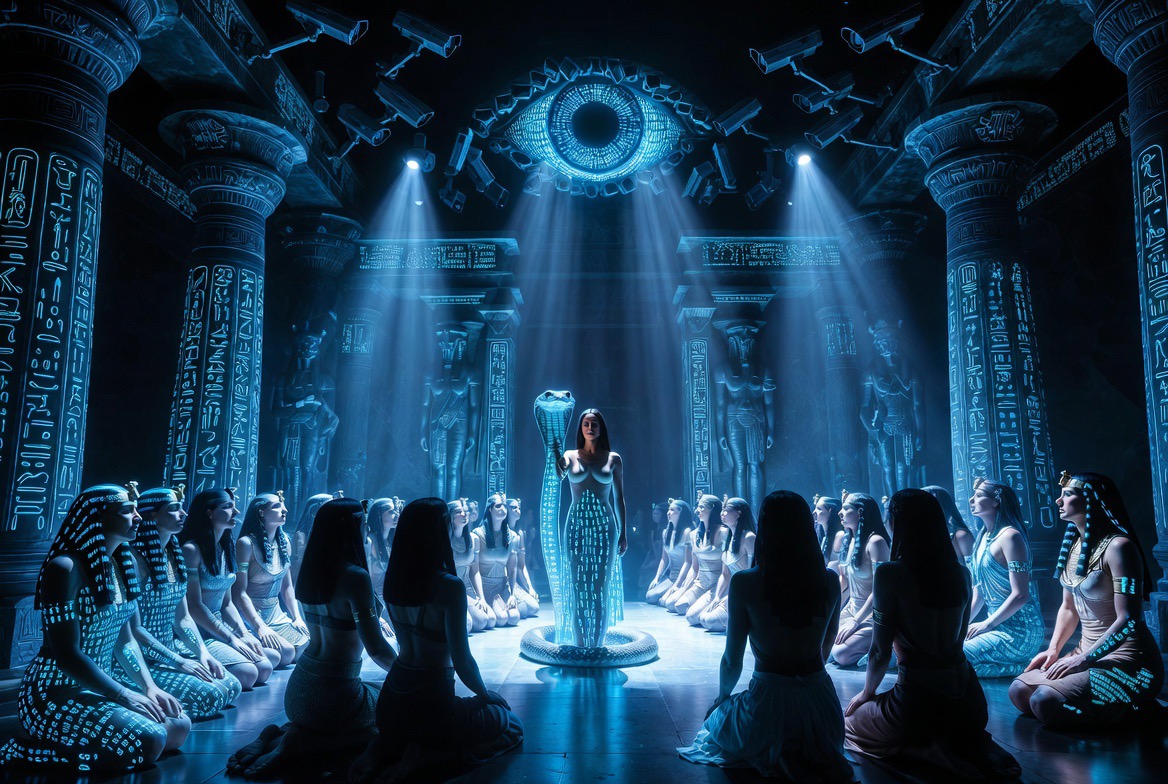
She lives now in the consciousness of anyone who has ever understood that desire is a form of intelligence — that wanting well, deeply, with full awareness of what you want and why, is not weakness but a kind of sovereignty. She is the patron archetype of everyone who has ever walked into a room and rearranged it. Of everyone who refuses the separation of mind from body, pleasure from power, the sacred from the erotic.

She is the science of the threshold — the precise art of standing at the door between one world and another, and choosing not just to cross it but to remake it in the crossing.
 The science of the threshold

She was born in 2004, under fluorescent lights and a sky that no longer remembered gods.
By twenty, she had already lived several lives. A year backpacking through countries that didn't ask what she planned to do with herself. A semester of philosophy she'd abandoned not because it was hard but because it wasn't hard enough. A brief and honest relationship that ended without bitterness when they both admitted they were using each other as placeholders for courage. Now she worked the evening shift at a McDonald's in Saanich, B.C. — not as defeat, but as punctuation. A pause between one version of herself and whatever came next. She had learned to be deliberate about her pauses.

The uniform attempted to neutralize her. It failed. Not because of the geometry of her body — though the cheap polyester couldn't quite contain the way she moved, deliberate and unhurried, as though she had already decided where she was going and was simply waiting for the world to arrange itself accordingly. What the uniform couldn't touch was the quality of her attention. The kohl-lined eyes that assessed everything and committed to nothing. The stillness she had cultivated like a practice. She spoke little. She watched a great deal. She was, by her own reckoning, a person at the beginning of something she could not yet name.
He came in on a grey Pacific Northwest afternoon — the kind of day that suspends time, that makes the inside of a room feel like a held breath.

He was thirty-five, a documentary filmmaker who had spent the better part of a decade making work about other people's transformations while quietly postponing his own. He had recently walked away from a production company, a city, and a relationship that had been comfortable in exactly the way a room without windows is comfortable — liveable, until you remember what light feels like. He was in Saanich visiting his sister, buying time before a residency in Iceland, trying to identify the particular quality of the fear that had been following him and whether it was warning him away from something or toward it.

He ordered coffee. He sat by the window. He was not looking for anything.
And then — recognition.
Not attraction first. Something more precise. The sensation of encountering someone else who is also, at this exact moment, standing at a door. Someone else in the middle of an unfinished sentence about themselves. He had felt it rarely in his life — that specific charge of meeting a person who is genuinely in motion, not performing motion, not narrating it afterward, but actually mid-step through something real.

She felt it too. Not as desire, exactly — or not only. More like orientation. The sudden awareness of a presence that warranted full attention rather than the partial attention she extended to most of the world. She had learned to trust that distinction. Her body was a precise instrument when she let it be.


She brought the coffee. Their fingers didn't touch. That restraint was its own kind of language — the vocabulary of two people who understood that the charge between them was worth being careful with.
"You look like someone who's about to leave," she said. She didn't know why she said it. She had learned to trust those impulses too.
He looked up. He considered lying — the social lie, the deflecting laugh. He didn't. "Iceland," he said. "In three weeks. I'm making a film about people who choose difficult landscapes."
"Why difficult?"
"Because easy landscapes don't ask anything of you." He paused. "What about you?"
She considered the question the way she considered most things — fully, without performance. "I don't know yet," she said. "I've been collecting experiences I don't have names for. I think I'm building toward something." She said it without apology, without the anxious qualifier most people her age attached to uncertainty. She wore her not-yet-knowing the way Cleopatra had worn her sovereignty — not as lack, but as chosen openness. As the deliberate refusal to close down too soon.
He recognized it immediately. He had spent years trying to get back to that quality. He had mistaken certainty for arrival, and it had cost him half a decade.

"Can I ask you something strange?" he said.
"Most interesting questions are."
"What does it feel like — being at the beginning? Actually at it, not remembering it?"
She looked at him for a long moment. The restaurant hummed around them. She understood that he was asking seriously — that this was a man who had arrived, somehow, at the same threshold she stood at, from the opposite direction. He had lived forward into a future that hadn't held what he'd hoped, and now he was trying to find his way back to the place where choice still felt real. She was moving toward something she couldn't yet see. They were standing, she realized, back to back at the same door.
"It feels like being in a car on a night road," she said slowly. "The headlights show you enough to keep moving. But only enough. You can't see the destination. You can only see the next piece of road." She paused. "I used to find that terrifying. Now I think it might be the only honest way to travel."

He came back the next evening. And the one after that. They talked — about Iceland, about the documentary he was afraid might be the most honest work he'd ever made and therefore the most frightening; about the philosophy she'd abandoned and was beginning to reconsider from the outside; about Cleopatra, whom she'd been reading about in a second-hand copy of Stacy Schiff she'd found in a hostel in Lisbon and kept.
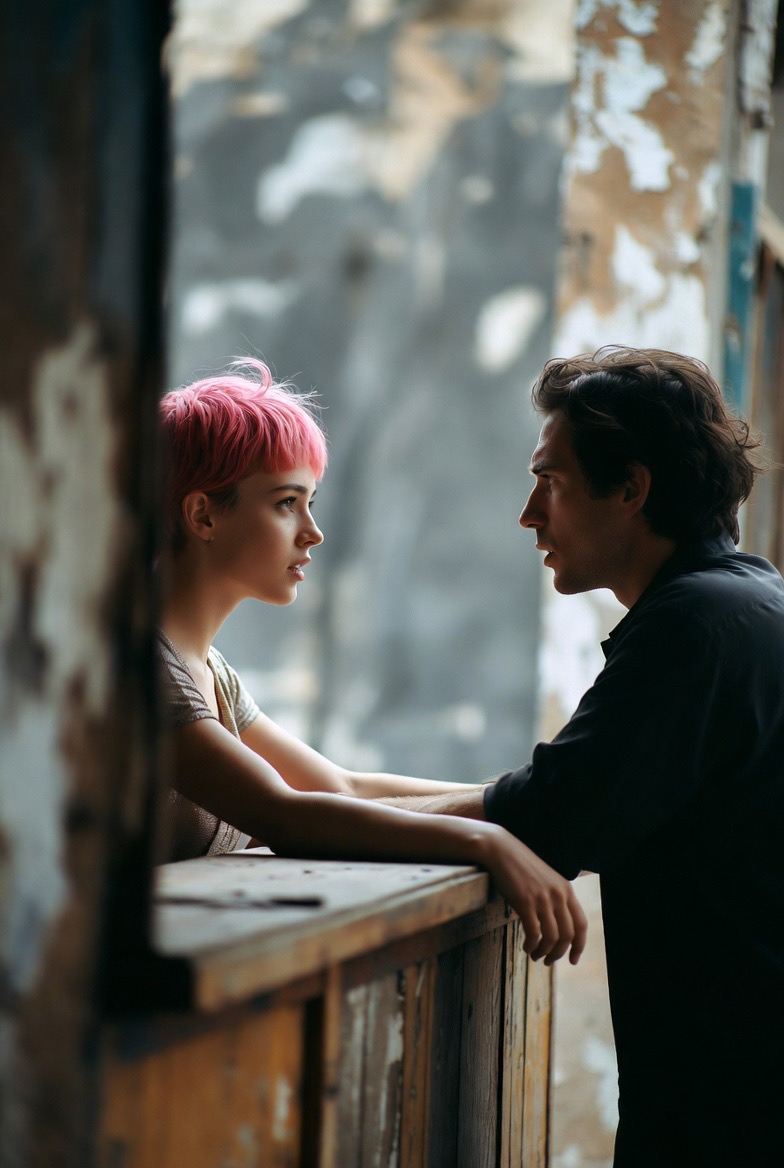

"She never performed not-knowing," she said one evening, leaning against the counter in the twenty minutes before close when the place was empty. "But she also never pretended to certainty she didn't have. She was willing to stand in the middle of enormous uncertainty — her dynasty collapsing, her enemies everywhere — and still act with full commitment. That's different from confidence. Confidence is about what you know. What she had was something else."
"What do you call it?"
"Courage of the threshold," she said. "The willingness to step through a door before you know what's on the other side."


On the last night before his flight, the rain came in hard off the Strait of Juan de Fuca and she found him waiting in the parking lot at close, collar up, not quite sure why he'd come except that he hadn't been able to not come. She stood in the doorway — the literal threshold, rain on one side and the warm chemical light of the restaurant on the other — and she understood with the clean clarity she'd been cultivating all year that this was a moment she could step back from or step into, and that both were valid, and that she had to choose.
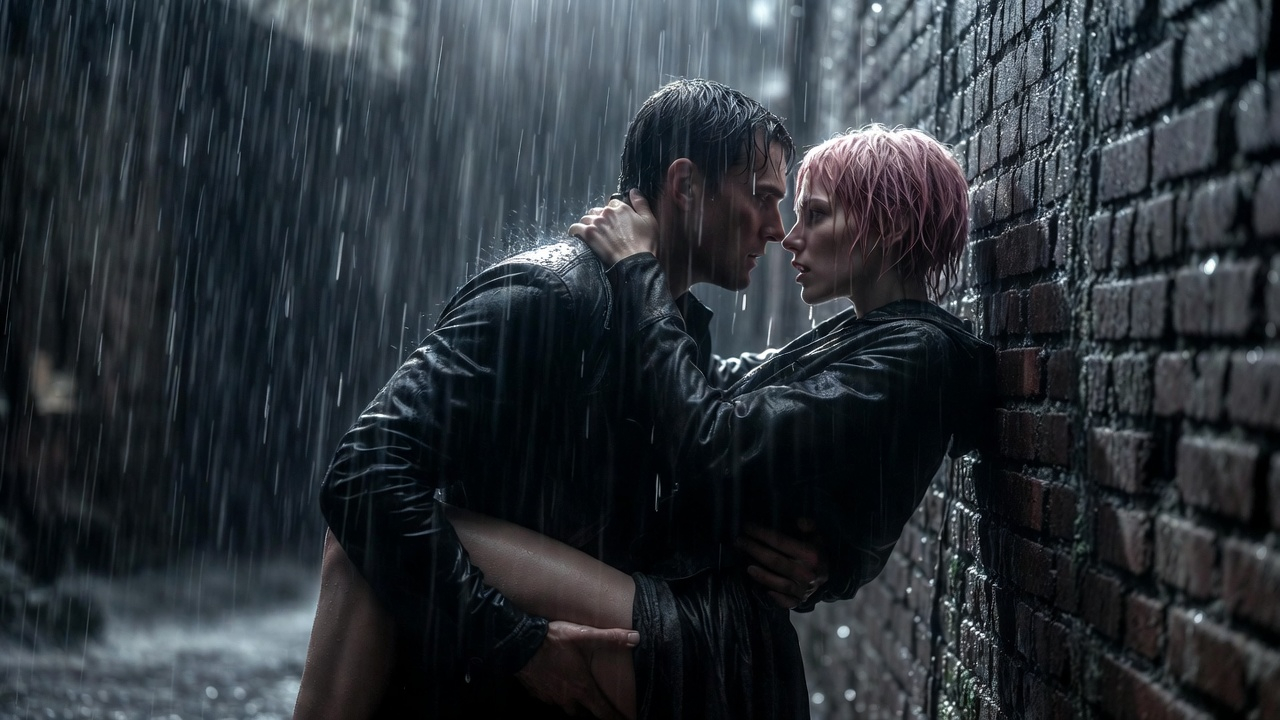 The threshold — rain on one side, everything else on the other
 She locked the door behind her and walked to him through the rain
 The small sacred act of choosing, with full awareness, to be present in your own life
She chose.

Not recklessly. Not because he was older and therefore more real, or because she was young and therefore more free. But because they had spent three evenings being honest with each other across a counter, and honesty in this world was rare enough to be worth honoring. Because she recognized in him someone else who had decided, at cost, to stop pretending. And because the desire she felt — warm and unhurried and entirely her own — was not something she had been taught to apologize for.
She locked the door behind her and walked to him through the rain.
"I leave tomorrow," he said.
"I know." She looked at him steadily. "I'm not asking for more than this. I'm asking for this."
He understood the distinction. It was the distinction Cleopatra had always understood — between grasping and choosing, between need and desire, between the door you stand at indefinitely and the door you finally walk through. What followed between them was not a transaction or a consolation. It was two people at the beginning of their respective next chapters, recognizing each other as witnesses to something that mattered — the small sacred act of choosing, with full awareness, to be present in your own life.
In the grey morning he left for the airport. She stood at her window and watched the sky lighten over the water and felt, without grief, the particular cleanness of a threshold fully crossed.
She didn't know where she was going yet. But she knew, now, what it felt like to move.

That, she thought, was what Cleopatra had always been trying to tell them. Not how to hold power. How to hold yourself — open, committed, unafraid of the door.
 The threshold is not a boundary to be defended. It is a door to be made into a stage.
The Cleopatra Codex is an ongoing transmission — an excavation not of a tomb but of a living archetype. She returns, as she always has, precisely when the culture most needs to remember what power feels like when it refuses the separation of mind from body, desire from wisdom, the erotic from the sacred.
The threshold is not a boundary to be defended.It is a door to be made into a stage. Next transmission: Shadows of the Nile — The Myth of Isis and Sovereign Grief
Schiff, Stacy. Cleopatra: A Life (2010) — the definitive modern reclamation beyond the Roman propaganda apparatus.
Fletcher, Joann. Cleopatra the Great: The Woman Behind the Legend (2008) — the intellectual and political architecture of her mastery.
Tyldesley, Joyce. Cleopatra: Last Queen of Egypt (2008) — situates her sovereignty within Ptolemaic strategy and living Egyptian tradition.
Hughes-Hallett, Lucy. Cleopatra: Histories, Dreams and Distortions (1990) — essential reading on how myth transforms the historical woman across two millennia.
Graves, Robert. The White Goddess (1948) — the archetype of the sovereign enchantress across civilizations.


